
How to Increase Magnetic Pull Force Without Increasing Magnet Size?
Introduction
In many industrial, automotive, and consumer electronics applications, magnetic pull force is a critical factor—but increasing magnet size to boost strength is often not an option. Whether you’re designing a compact wearable device, a space-constrained industrial component, or a sleek consumer product, bulky magnets can ruin product aesthetics, increase production costs, and fail to fit into tight assemblies. This blog will answer these pain points for you.
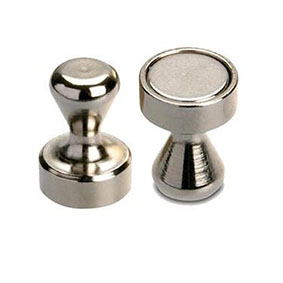
Stronger Pull Force, No Size Increase
This is the core pain point for engineers, product designers, and manufacturers: needing stronger magnetic pull without sacrificing size, portability, or cost-efficiency. The good news? You don’t have to choose between size and strength—with the right strategies, you can achieve effective Magnetic Pull Force Boost while keeping your magnet’s footprint unchanged, unlocking better performance and competitive advantages for your products. A key solution lies in using High Grade Neodymium Magnet and an Optimized Magnetic Circuit to avoid size increases.
3 Core Strategies for Magnetic Pull Force Boost (No Size Increase)
The key to boosting magnetic pull force without increasing size lies in three core elements: High Grade Neodymium Magnet, Optimized Magnetic Circuit, and surface treatment. These strategies target the root of magnetic strength—maximizing flux density and reducing magnetic leakage—rather than simply increasing the magnet’s physical volume. Let’s break down the most effective methods, supported by real-world data to prove their impact, especially how each element contributes to Magnetic Pull Force Boost. Below is a comparative table showing how these strategies improve pull force for a standard 10mm x 3mm disc magnet (a common size for compact applications), without changing its dimensions.
|
Strategy |
Magnet Specification (Size Unchanged) |
Pull Force (Vertical, Against Steel Plate) |
Performance Improvement |
|
Standard N35 Magnet (No Optimization) |
10mm x 3mm Disc, Uncoated, Open Magnetic Circuit |
~1.6 kg (3.5 lbs) |
Base Level |
|
High-Grade Material (N52) |
10mm x 3mm Disc, Uncoated, Open Magnetic Circuit |
~2.3 kg (5.1 lbs) |
~40% Increase |
|
N35 + Optimized Magnetic Circuit (With Yoke) |
10mm x 3mm Disc, Uncoated, Semi-Closed Circuit |
~2.0 kg (4.4 lbs) |
~25% Increase |
|
N52 + Magnetic Circuit + Nickel Coating |
10mm x 3mm Disc, Nickel-Coated, Semi-Closed Circuit |
~2.5 kg (5.5 lbs) |
~56% Increase |
Strategy 1: Upgrade to High Grade Neodymium Magnet
The first and most impactful strategy is upgrading to a High Grade Neodymium Magnet. As the golden rule of magnets goes: grade × size = force—but when size is fixed, increasing grade becomes the most direct way to achieve Magnetic Pull Force Boost. For example, replacing a standard N35 magnet with an N52 magnet (the highest grade of neodymium magnets) delivers a ~40% pull force increase without changing size, as shown in the table above. This addresses the pain point of “weak strength in small magnets” by leveraging higher magnetic energy density—N52 magnets (a top High Grade Neodymium Magnet) have a maximum magnetic energy product ((BH)max) that is significantly higher than N35, meaning they can store and release more magnetic energy in the same volume. The benefit? Your compact product gets the strength it needs without becoming bulky, making it more competitive in markets where size and performance are both critical.
Strategy 2: Adopt an Optimized Magnetic Circuit
The second strategy is adopting an Optimized Magnetic Circuit to reduce flux leakage. Most small magnets use an open magnetic circuit, where magnetic flux escapes into the air, wasting strength—but a semi-closed, Optimized Magnetic Circuit (adding a magnetic yoke or steel cup) redirects flux to the working surface, concentrating it for stronger pull force. This is especially valuable for applications where the magnet can’t be made larger, like medical devices or precision sensors. The yoke acts as a “flux guide,” ensuring more magnetic energy is directed toward the object being attracted, which directly contributes to Magnetic Pull Force Boost. The benefit here is twofold: you get stronger pull force without size increases, and the magnet’s performance becomes more consistent, even in tight spaces—solving the pain of “unreliable strength in compact assemblies.”
Strategy 3: Surface Treatment & Air Gap Minimization
Finally, surface treatment and minimizing air gaps can further enhance pull force, complementing the effects of High Grade Neodymium Magnet and Optimized Magnetic Circuit for a comprehensive Magnetic Pull Force Boost. A smooth, corrosion-resistant coating (like nickel or zinc) ensures maximum contact between the magnet and the attracted surface, reducing tiny air gaps that cause exponential flux loss. Even a 0.1mm air gap can reduce pull force by 10–15%, so eliminating these gaps is crucial for maximizing the benefits of your High Grade Neodymium Magnet and Optimized Magnetic Circuit. This addresses the pain point of “inconsistent performance due to surface wear or gaps” and delivers the benefit of longer-lasting, more reliable magnetic strength—critical for products that need to perform consistently over time, such as magnetic latches or charging connectors.
Combine All 3 Strategies for Maximum Magnetic Pull Force Boost
By combining these three strategies—High Grade Neodymium Magnet, Optimized Magnetic Circuit, and surface treatment—you can achieve significant Magnetic Pull Force Boost without increasing magnet size. This not only solves the core pain points of size constraints and weak strength but also delivers tangible benefits: better product performance, sleeker design, lower production costs, and a competitive edge in crowded markets. Each element works in tandem: the High Grade Neodymium Magnet provides the base strength, the Optimized Magnetic Circuit maximizes flux usage, and surface treatment ensures consistent performance—all working together to avoid size increases while boosting pull force. Whether you’re designing consumer electronics, industrial components, or medical devices, these strategies let you prioritize both size and strength—without compromise.
Xiamen kings magnet Co., Ltd. has been deeply engaged in the magnetic industry for more than ten years, providing you with professional magnetic solutions. We are committed to the research and production of high-performance, high-precision, and high-difficulty products, truly meeting customers' maximum needs for product applicability, economy, and reliability!
FAQ (Frequently Asked Questions)
Q1: Will upgrading to a high-grade magnet (like N52) increase my production costs significantly?
A1: While N52 magnets are slightly more expensive than standard N35 magnets, the cost increase is minimal compared to the value of improved performance. In most cases, the cost per unit only increases by 10–15%, but you get a ~40% pull force boost—making it a cost-effective solution for applications where strength is critical. Additionally, you avoid the higher costs of resizing your product to fit a larger magnet.
Q2: Can these strategies work for all types of magnets (e.g., neodymium, ferrite)?
A2: These strategies are most effective for neodymium magnets, especially High Grade Neodymium Magnet, which have the highest magnetic energy density and are commonly used in compact, high-performance applications. An Optimized Magnetic Circuit and surface treatment can also benefit ferrite magnets, but their grade range is more limited, so the Magnetic Pull Force Boost will be smaller (typically 10–20% instead of 40+%).
Q3: Will optimizing the magnetic circuit add extra bulk to my product?
A4: No—magnetic yokes and steel cups are extremely thin (often 0.5–1mm thick) and can be integrated into your product’s existing design without increasing overall size. In many cases, the yoke can double as a structural component, so it doesn’t add unnecessary bulk or weight.